
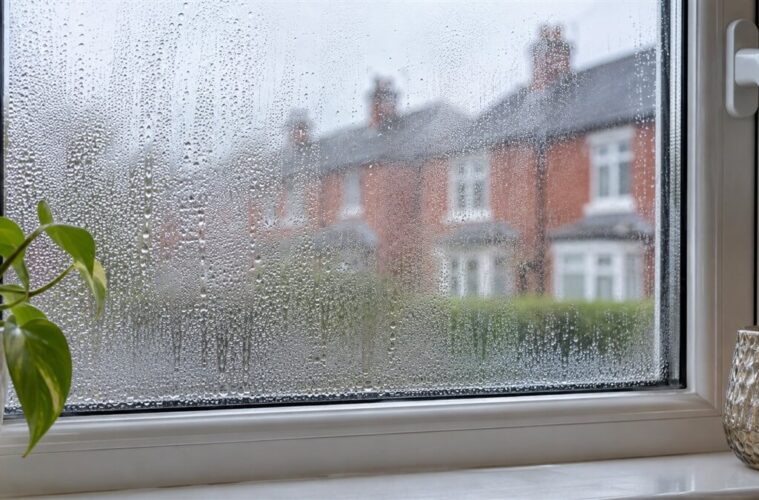
Moisture problems often have more than one cause. For builders and developers, lasting solutions start with understanding how the building fabric, ventilation and condensation interact.
1. Diagnose the source before treating the symptoms
Before starting remedial work, establish whether a damp patch comes from condensation, rain entering through defects such as failed flashings or overflowing gutters, leaking plumbing, or moisture moving through the building fabric. Each needs a different fix. Check where staining appears, use moisture readings alongside a visual inspection, and monitor indoor humidity over time.
The English Housing Survey found a damp problem in 1.4 million homes in England in 2024, or 5% of all homes. The figure rose to 10% in the private rented sector.
2. Design adequate ventilation into the property
Cooking, showering, drying clothes and breathing all release moisture into the air. Plan ventilation from the outset. In England, Approved Document F gives guidance on meeting the Building Regulations. For intermittent extract systems, the guidance gives minimum rates of 15 litres per second for a bathroom and 30 litres per second for a kitchen cooker hood that extracts outdoors. Check which edition applies to the project and make sure the extract rates, ductwork and background ventilation work together.
3. Pay attention to windows and condensation risk
Condensation forms when moist air cools below its dew point at a surface. Windows are often where it shows first. Making a home more airtight increases the need for planned ventilation, and gaps in insulation around frames leave cold surfaces where moisture may collect.
VELUX roof windows, for example, offer controllable ventilation in loft rooms. Some models include a flap that lets air in with the window closed. Check the model and account for insulation, flashings and the room’s extract ventilation when planning the installation.
4. Treat damp and mould as a building and health issue
Recurring damp and mould warrant an investigation into the design, construction or services of a building. Government health guidance links damp and mould to respiratory problems, including worsening asthma.
Since 27 October 2025, Awaab’s Law has required social landlords in England to investigate potential significant damp and mould hazards within 10 working days of becoming aware of them. If the investigation confirms a significant hazard, landlords must complete the work needed to make the home safe within five working days of the investigation ending. Emergency hazards have a 24-hour deadline for investigation and action to make them safe.
Find and fix the source of the moisture before redecorating. In new homes and refurbishments, plan ventilation and insulation together and check how the finished building performs.