
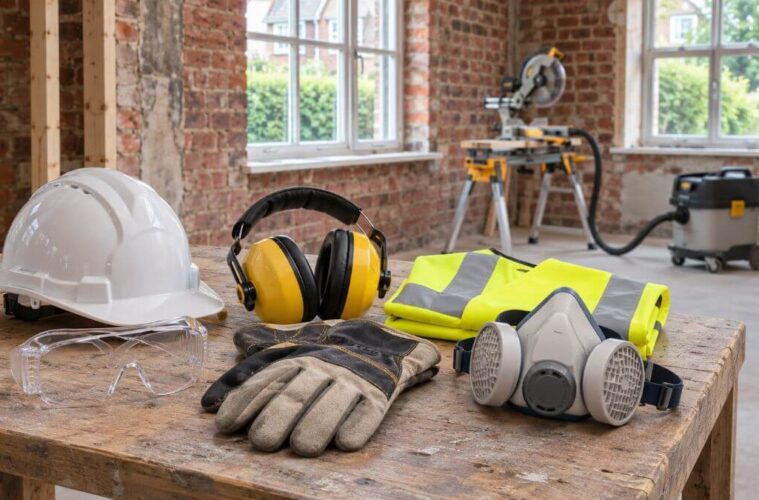
Renovation sites change by the day. Walls come down, floors open up and dust fills the air, so the risks workers face this morning may not be the ones they meet this afternoon. Good planning and suitable protection keep pace with that change.
1. Identify Hidden Hazards Before Renovation Begins
Before anyone picks up a tool, find out what the building is hiding. Older properties may contain asbestos in ceiling tiles, insulation, flooring or textured coatings, alongside old wiring, lead paint and structural weaknesses. Disturbing these without knowing is how exposure happens. Commission the right surveys, including an asbestos refurbishment survey where major work is planned; share the findings with everyone on site; and agree what must stop and be reported if suspect material turns up unexpectedly. A little investigation at the start prevents harm, delays and expensive rework later.
2. Control Dust During Stripping, Cutting and Alteration Work
Dust is not just a nuisance to be swept away. Cutting, chasing, sanding and demolishing can release fine particles, including respirable crystalline silica from brick, concrete and stone, that damage the lungs over time. When cutting engineered stone, such as kitchen worktops, HSE highlights research showing that dry cutting can expose workers to five to ten times more silica dust than wet methods. Choose wet cutting or on-tool extraction, ventilate work areas, clean up with suitable vacuums instead of brushes, and provide properly fitted respiratory protective equipment where other controls cannot remove the risk.
3. Match Workers’ Protection to Changing Site Conditions
Protection chosen on day one may not suit day thirty. A stripped-out shell with no windows, an open roof or a long run of outdoor work brings wind, damp and low temperatures that a finished building never would. Choose PPE and workwear for the real risks, such as impact, dust, noise and cold, and review the choices whenever the job moves into a new phase. Where cold exposure is identified, heated hoodies can help protect workers who spend long hours in unheated spaces, as part of a wider approach alongside suitable layers, breaks and warm rest areas. A comfortable kit is a kit that actually gets worn.
4. Prevent Falls as the Structure Changes
Renovation often removes the very things that keep people safe. Lifting floorboards, cutting stairwell openings or stripping a roof creates new edges and holes that were not there yesterday. Falls from height remain a major cause of worker deaths: HSE’s latest figures record 31 workers killed in falls from height in 2025/26 (provisional). Plan access before work starts, use guardrails, covers and properly erected scaffolding or platforms, mark and cover openings clearly, and make sure someone competent supervises. Revisit the arrangements each time the structure changes.
Renovation sites reward those who plan ahead. Know what is hiding in the building, control dust at source, adapt protection as conditions change and guard every new opening. Do that, and your team is far more likely to finish the job safely.